Travelling by Bus and Train
Public transport is commonly used in the Netherlands for commuting, studying, appointments, and day trips. In Groningen, Friesland, and Drenthe, buses and trains connect cities, towns, villages, campuses, hospitals, and business areas. This page explains the basics of travelling by bus and train in the Northern Netherlands, including planning your journey, paying for public transport, checking in and out, and finding travel updates.
What you can find on this page:
Planning your journey
The easiest way to plan a public transport journey is by using a travel planner. Many people in the Netherlands use 9292 or the OVinfo app to plan journeys by public transportation. You can also use the apps to check departure times, routes, platforms, transfer options, delays, and walking directions.
For journeys in Groningen, Friesland, and Drenthe, it is also useful to check the websites or apps of the public transport operators active in the region. Qbuzz operates many regional bus services in the North, while Arriva operates regional buses and trains in several parts of the Northern Netherlands. NS operates many national train routes, including connections between the North and other parts of the Netherlands.
When planning a journey, check the departure time, platform or bus stop, transfer time, and whether there are planned works or disruptions.
Travelling by bus
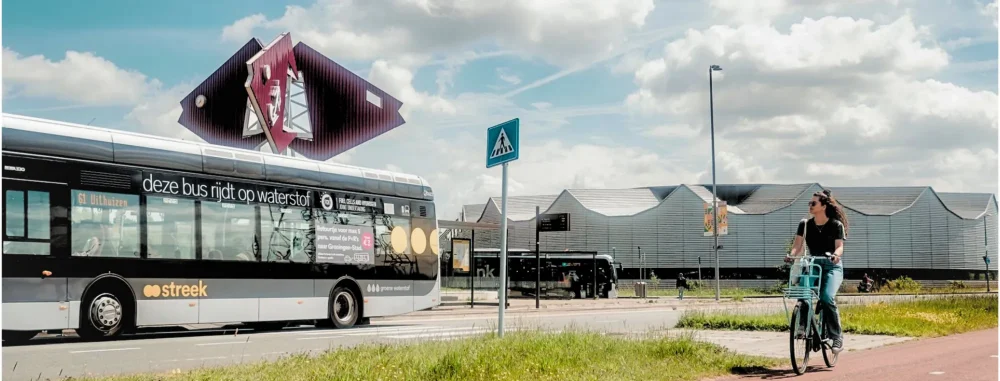
Buses are useful for local and regional travel, especially in areas where there is no train station nearby. In the Northern Netherlands, buses connect cities, villages, campuses, business parks, hospitals, and train stations.
Some buses run less often in the evening, at weekends, or in rural areas. Check your route in advance, especially if you need to make a transfer, travel late at night, or travel to a smaller village.
You can usually check in and out with OVpay, an OV-pas, debit card, credit card, or mobile phone. In some cases, you can also buy a single ticket, day ticket, or regional ticket. Ticket options and prices can differ per operator and region, so always check the operator’s website or app before travelling.
Travelling by train
Trains are often a fast way to travel between cities and larger towns. In the Northern Netherlands, train services are operated by different providers, including NS and Arriva, depending on the route.
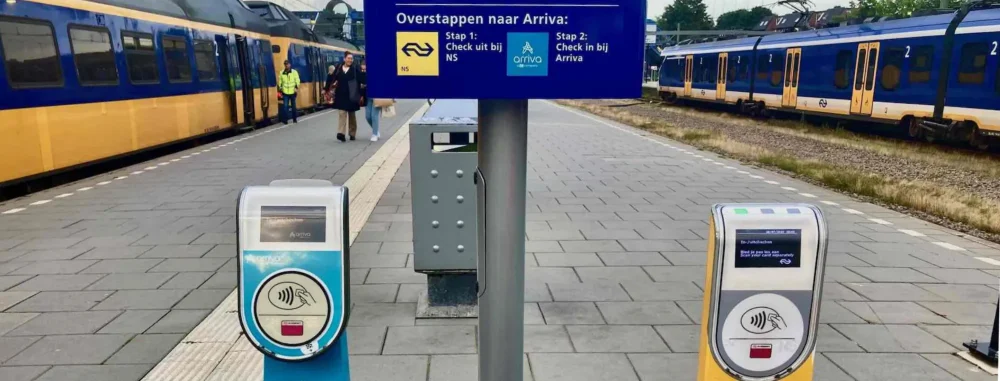
For example, NS operates many intercity and national train connections, while Arriva operates several regional train routes in Groningen and Friesland. If you transfer between train operators, you may need to check out with the operator you arrived with and check in again with the operator you are continuing with. Look for the correct card reader or gate at the station before continuing your journey.
You can travel by train using OVpay, an OV-pas, debit card, credit card, mobile phone, or an e-ticket. You can also buy tickets online, in an app, or at ticket machines at many stations.
Paying for public transport
There are several ways to pay for public transport in the Netherlands. The most common options are OVpay, an OV-pas, an e-ticket, a single ticket, a day ticket, or a subscription.
OVpay allows you to check in and out with a contactless debit card, credit card, or mobile phone. This can be convenient if you do not travel often or do not have a personal public transport pass.
If you travel regularly, it may be worth checking whether a subscription, discount product, or season ticket is useful for you. Some providers offer monthly or annual subscriptions, off-peak discounts, weekend travel products, student travel products, or regional tickets. Always check the conditions before buying a subscription, including when it is valid, which routes or operators it covers, and whether it needs to be linked to a personal public transport pass.
Children up to and including 3 years old travel for free on public transport. Children aged 4 to 11 can usually travel with a 34% age discount on buses, trams, and metros. This discount can be added to a personal OV card or, in some cases, through OVpay.
For train travel, different children’s tickets or subscriptions may apply, such as NS Kids Vrij. Some public transport operators also offer their own discounts for children, teenagers, students, or seniors. Check the relevant operator’s website before travelling.
Checking in and out
In Dutch public transport, you usually need to check in at the start of your journey and check out at the end. You do this by holding your OV-pas, payment card, or mobile phone against the card reader or gate.
Use the same card or device to check in and out. For example, if you check in with your debit card, check out with the same debit card, not with your phone or another card.
If you transfer between different train operators, you may need to check out with one operator and check in again with the next one. Look for the correct card reader or gate at the station.
If you forget to check out, you may be charged a correction fare. You can usually correct your journey through the transport provider or the relevant public transport payment website.
Delays, disruptions, and accessibility
Public transport can be affected by delays, cancellations, roadworks, railway works, strikes, weather, or special events. Before travelling, check your route in 9292 or in the app or website of the relevant operator.
If you have reduced mobility, use a wheelchair or mobility aid, have a visual impairment, or need extra assistance, check accessibility information before your journey. 9292 has an accessible journey planning option that can take the accessibility of stops, stations, and vehicles into account.
For regional buses and trains, also check the accessibility information from the relevant operator, such as Arriva or Qbuzz. Accessibility can depend on the vehicle, station, stop, route, and local facilities.
FAQ about using bus and trains in the Northern region
How do I plan a bus or train journey in the Northern Netherlands?
You can use a public transport journey planner, such as 9292, to plan journeys by public transport. For journeys in Groningen, Friesland, and Drenthe, you can also check the websites or apps of operators such as Arriva, Qbuzz, and NS.
Do I need to check in and out when using public transportation?
Yes. In most cases, you need to check in at the start of your journey and check out at the end. Use the same card or device for both. If you transfer between train operators, you may need to check out with the operator you arrived with and check in again with the operator you are continuing with. If you forget to check out, you may be charged a correction fare. You can usually correct your journey through the transport provider or the relevant public transport payment website.
How can I pay for public transport in the Netherlands?
You can usually pay with OVpay by checking in and out with a contactless debit card, credit card, or mobile phone. You can also use an OV-pas, e-ticket, single ticket, day ticket, or subscription. Some discounts or travel products may require a personal OV-pas.
Do children get discounts on public transport?
Children up to and including 3 years old usually travel for free on public transport. Children aged 4 to 11 may be eligible for age-based discounts on buses. For train travel, different children’s tickets or subscriptions may apply, so check the relevant operator before travelling.
Where can I find accessibility information for public transport?
You can use 9292’s accessible journey planning option to check accessibility information for stops, stations, and vehicles. You can also check the accessibility information from the relevant operator, such as Arriva, Qbuzz, or NS.